What Is a Sprinkler Blowout and Why Does Your Midland, MI, Lawn Need One?
Irrigation Systems Winterization keeps your Midland, MI, lawn's sprinkler system safe from the region's harsh freeze cycle every fall. When temperatures drop below 32°F, any water left sitting inside underground pipes and sprinkler heads can freeze, expand, and crack the components in ways that may not show up until spring. A sprinkler blowout is the professional method used to prevent exactly that kind of damage. This guide explains what a blowout is, how it works zone by zone, and why doing it yourself in Mid-Michigan carries real risk.
What Is a Sprinkler Blowout, and How Does It Work?
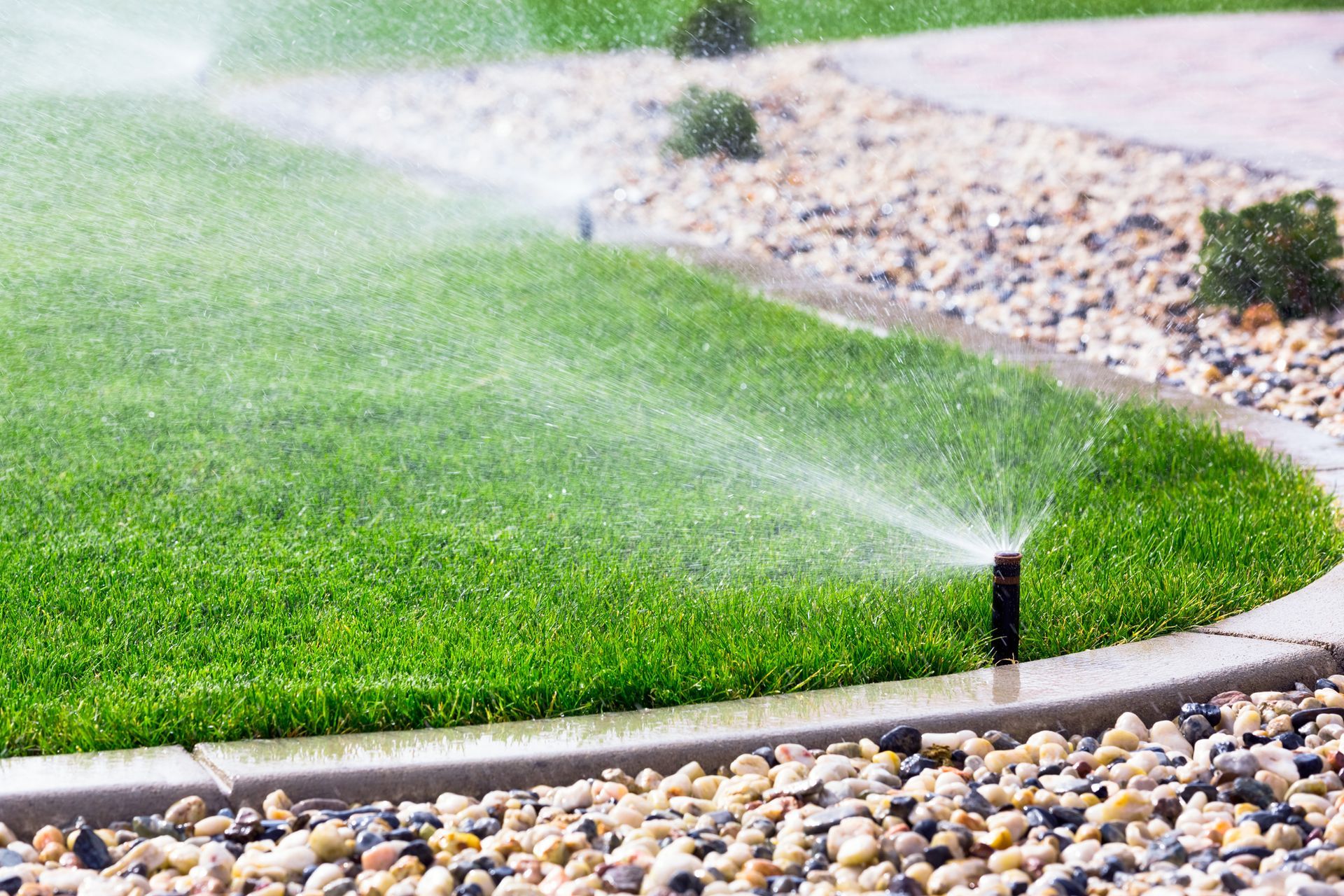
A sprinkler blowout uses compressed air to force water out of every part of your irrigation system before winter arrives. A professional technician connects a high-volume air compressor to the system's mainline connection point. From there, the process moves through each zone of your yard, one at a time, until the lines are dry.
Here is a typical zone-by-zone sequence:
- The technician opens one zone at the controller, activating a set of sprinkler heads.
- Compressed air is pushed through the zone's pipes until water is visibly expelled from each head.
- The heads run briefly until only air exits, confirming the line is clear.
- The technician closes that zone and moves to the next, repeating the process throughout the entire system.
- The backflow preventer, valves, and main shutoff are drained and closed last.
The air compressor used for this job is not a typical shop compressor. Professional-grade units deliver a high volume of air measured in cubic feet per minute (CFM), which is critical for clearing multiple zone lines efficiently and completely. Using too little CFM is one of the most common DIY mistakes that leaves water behind.
Why Does Midland's Climate Make This Service Essential?
Midland, MI, faces a genuine freeze threat starting in early October. Climate data shows there is roughly a 50% chance of a 32°F frost by around October 6, and an 80% chance by October 14. Winters here regularly push temperatures well below freezing for extended periods, with lows that can reach the teens and single digits. That sustained cold drives frost deep into the soil, putting underground irrigation pipes at serious risk.
Irrigation Systems Winterization in Midland, MI, is not optional for property owners who want to avoid broken pipe repairs in the spring. Even one hard freeze with water still inside a zone can crack PVC pipes, split fittings, or damage solenoid valves. Those repairs can add up quickly, especially when excavation is needed to reach a buried line.
Neighborhoods along the Tittabawassee River corridor and residential streets throughout Midland County share similar sandy-loam soils that drain well but offer little insulating protection to shallow-buried irrigation lines. That makes proper Irrigation Systems Winterization especially important in this area, since there is no natural buffer to protect vulnerable pipe depths during extended cold snaps.
Why DIY Blowouts Are Risky in Mid-Michigan
Skipping professional help for Irrigation Systems Winterization can lead to equipment damage and safety hazards. Here is what typically goes wrong with DIY attempts:
- Using an underpowered compressor leaves water in lower-elevation sections of pipe that may not drain by gravity.
- Overloading a zone with too much air pressure can damage sprinkler-head seals, valve diaphragms, and pipe joints.
- Standing near an active sprinkler head during a blowout creates a risk of injury from flying debris or a head ejecting under pressure.
- Forgetting a zone entirely, which is easy on multi-zone systems, leaves that section vulnerable to freeze damage.
- Failing to drain the backflow preventer is a frequent oversight that leads to a cracked preventer by November.
A professional knows the specific air volume and pressure required for each pipe diameter and zone layout. They carry the right equipment and follow a systematic process that covers every component of the system.
Do Irrigation Systems Need to Be Blown Out Every Year?
Yes, irrigation systems in Midland, MI, should be winterized every year before the first hard freeze. Water cannot be fully removed from underground lines by gravity alone. Even a small amount of standing water in a low point or valve chamber can freeze and cause damage. Irrigation Systems Winterization is the only reliable method for getting complete water removal across all zones, and skipping even one season puts the entire system at risk.
How Long Does a Sprinkler Blowout Take?
Most residential blowouts can be completed in under an hour, though the time may vary depending on the number of zones in your system and the size of the property. Larger systems with eight or more zones may take longer. Scheduling Irrigation Systems Winterization in late September or early October, before the first freeze arrives, gives your technician adequate time without rushing.
Schedule Your Irrigation Winterization Before the First Freeze
The best time to book a sprinkler blowout in Midland, MI, is mid-to-late September, giving you a window before the region's frost risk climbs sharply. Waiting until October means competing with a full schedule of last-minute calls, and waiting until after a freeze may mean the damage is already done.
White Pine Lawn & Snow provides irrigation system winterization and year-round sprinkler system services for residential and commercial properties throughout Midland and the Great Lakes Bay Region. The team understands local zone layouts, soil conditions, and the specific frost timeline that affects Mid-Michigan properties each fall.
Do not wait until October temperatures surprise you.
Contact the team today to schedule your fall blowout and protect your system through winter. You can also call
(989) 941-6176 to speak with the team directly, or find
White Pine Lawn & Snow on Google to read reviews and get directions.